
Check Valves Manufacturer
By admin / 21 May 2026
By Jayant ValvesThe Non-Return Valve (NRV) is a crucial component in industrial piping systems, ensuring safety and smooth flow operations. The compact design, efficient action and capability to eliminate problems such as water hammer which can cause pipeline damage and equipment issues make the Dual Plate Check Valve a popular choice for modern industries and engineers among the various types of NRVs. This valve is designed to be used to allow liquids or gases to pass through in one direction, and to automatically close the valve against backflow, thereby helping to protect the entire piping system. Its compact design, stability and durability offer a perfect choice for industries seeking to optimize pipeline performance, boost safety and ensure seamless, problem-free operation.
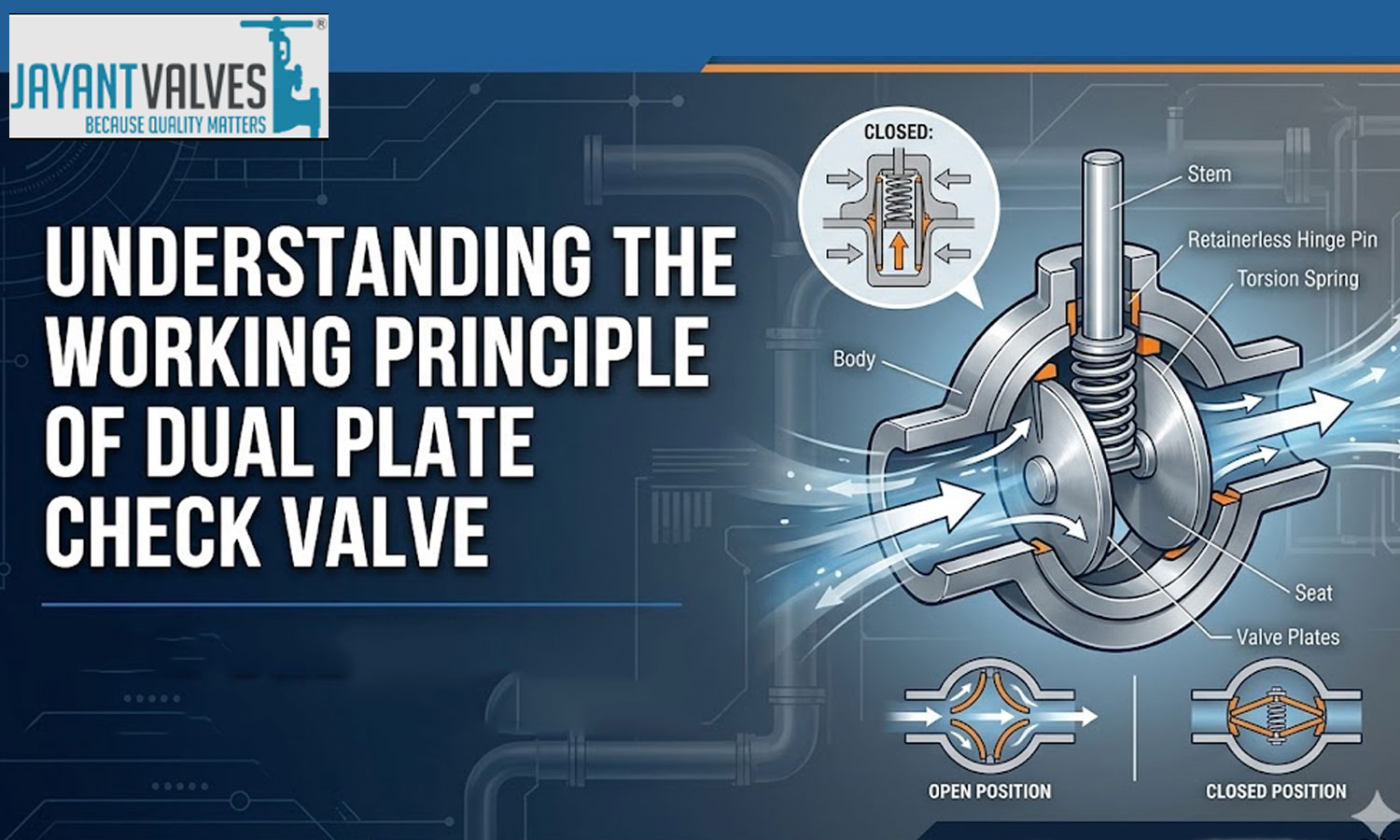
A Dual Plate Check Valve is a swing-type check valve with two spring-loaded plates as opposed to one heavy disc found in most swing check valves. This configuration enables the valve to be much smaller in size (also known as a "wafer" valve) and fit compactly between pipe flanges.
The Dual Plate Water Check Valve is a streamlined version that is almost 80% lighter than the conventional valves, which saves the need for heavy piping supports and simplifies installation.
The simplicity and physics of the DPCV are what make it so beautiful. The flow cycle can be broken down to this step-by-step:
The fluid (liquid or gas) enters the valve and forces the tension of the torsion springs out of the way. Both plates close towards the central pin with little turbulence of the media. The smaller plates and lighter weight allow for a very low amount of "cracking pressure" needed to open the plates.
When the plates are fully open, they are parallel to the flow. This design allows for a streamlined path, making a high-quality Dual Plate Check Valve a valve with an amazingly low pressure drop (saving energy costs for the pumping system).
It's where the DPCV is better than the rest. The torsion springs will automatically return the plates back towards the seat as the flow velocity is reduced or reversed.
The critical insight is that the plates have to move over a shorter distance than a swing check valve and thus close the valve in advance of the flow actually changing direction. This "non-slam" action helps to avoid the shock waves or "water hammer," which otherwise could damage high-cost pumps and instrumentation.
If we're going to consider the needs of Dual Plate Check (non-return) Valve (DPCV) systems, three things come to mind:
The Dual Plate Check Valve is more than simply a piece of equipment; it's a specialised device created for effectiveness and defence. You are making a smart choice for a "slam-free", low-maintenance investment in the future of your pipes when you select a DPCV.
A Dual Plate Water Check Valve's precision is the goal for water project stability when designing a new system or retrofitting an industrial water project.
Discover the best among the valve engineering and get the right one for your project at Jayant Valves.
Looking for high-quality check valves for your industrial needs? Contact us today to explore our wide selection and find the right solution for your system.
Feel Free to reach us: +91 8849022907

Jayant Valves is a leading manufacturer and supplier based in India, specializing in high-quality industrial valves, including Check Valves, Swing Check Valves, and Dual Plate Check Valves.
Owned & Powered by : #1 Vinayak InfoSoft - SEO Company Ahmedabad | Sitemap

